
Home › Blog › Why Do I Walk Into a Room and Forget Why?
Symptoms & Lifestyle| Why it happens | Why do I walk into a room and forget why? Passing through a doorway acts as a mental “event boundary” that clears working memory — the doorway effect. |
| It’s normal | Working memory only holds a few items briefly, so a small interruption easily knocks out your intention. It happens to everyone. |
| The fixes | Say the plan out loud, do one thing at a time, slow down, cut distraction — and shore up sleep, hydration, movement and daily nootropic support. |
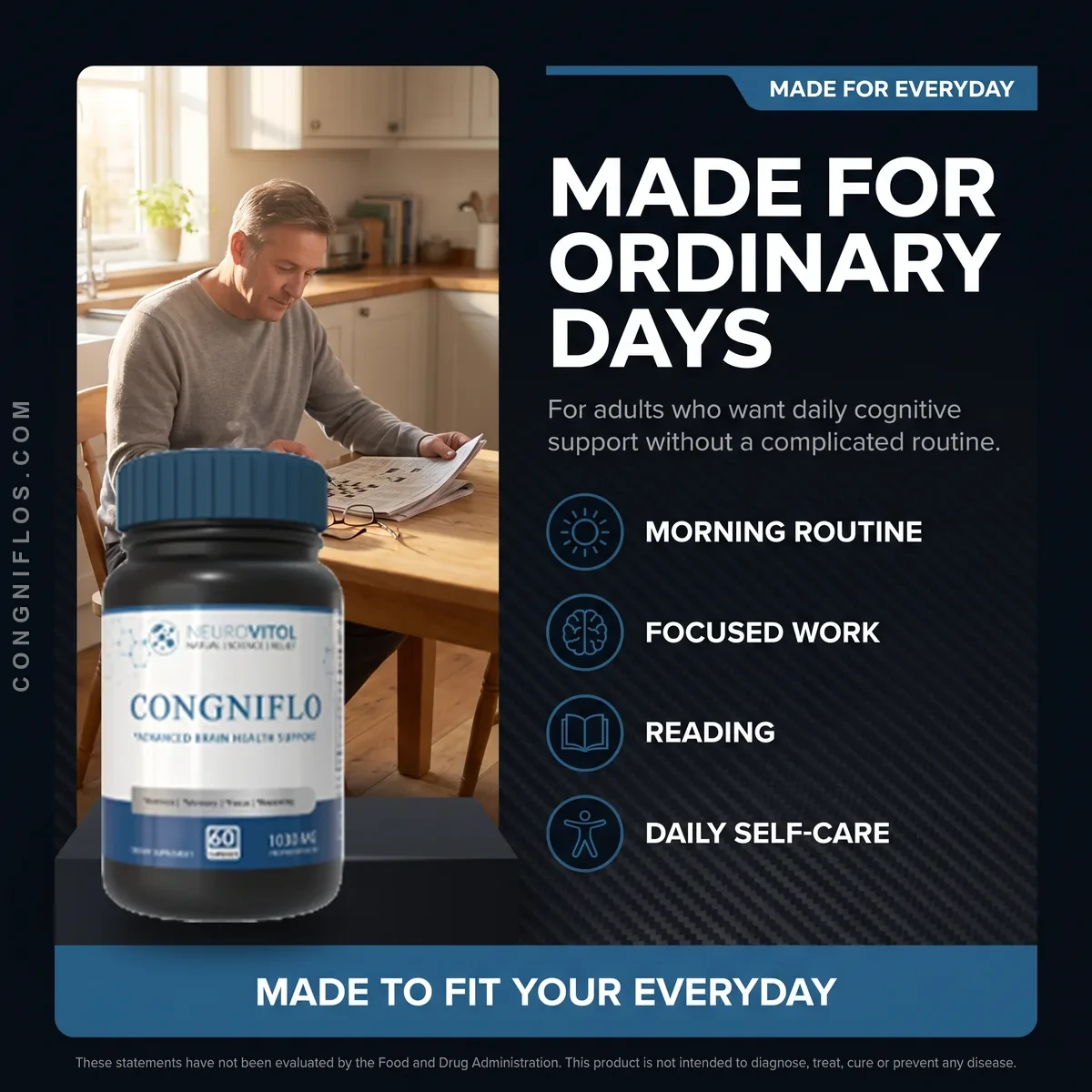
You stride into the kitchen with a clear mission — and by the time you get there, it has vanished. You stand blinking at the counter, phone in hand, wondering what on earth you came for. If you have ever muttered “why do I walk into a room and forget why?” take heart: this is one of the most universal and best-studied little glitches in human memory. It even has a name — the doorway effect — and understanding it is oddly reassuring, because it means your brain is working exactly as designed, not falling apart.
In this guide we will unpack what is really happening in your head when the thought disappears, why a humble doorway is so often the culprit, when these lapses are perfectly normal, and the everyday habits that keep your short-term memory from dropping the ball quite so often.
The leading explanation comes from a simple but powerful idea in psychology called event segmentation. Your brain does not record life as one endless film. Instead, it quietly chops continuous experience into meaningful chunks or “episodes” — making dinner, answering an email, walking to another room. The moment one episode ends and another begins is called an event boundary, and a doorway is one of the most powerful boundaries there is.
When you cross that threshold, your brain treats it as a cue that the last scene is over. It files away the details of the room you just left and refreshes its mental workspace to deal with the new environment. The problem is that your reason for moving — “get the scissors” — was being held in that same temporary workspace. In the reset, your intention can get swept out along with everything else. Researchers have shown this in the lab: people are reliably worse at remembering an object they were carrying in mind after they pass through a doorway than after they walk the same distance within a single room. The doorway itself, not the walking, is what does it.
To see why a doorway can be so disruptive, it helps to know how fragile the memory involved really is. The intention to fetch something lives in your working memory — the mental sticky note that holds a handful of items for a matter of seconds while you use them. It has a famously small capacity and no long-term storage. Anything you do not actively rehearse or write down starts to fade almost immediately, and any interruption can wipe the slate. A doorway is simply a well-timed interruption dressed up as a normal part of your day.
The doorway is rarely acting alone. If you set off to fetch the scissors while also thinking about a work email, half-listening to the radio and holding a mug of tea, your working memory is already overloaded before you reach the door. The more you are juggling, the less capacity is left to protect a single fragile intention — so it is the first thing to go. This is the same reason your focus frays when you try to do several things at once, a theme we explore in why you lose focus in the afternoon.
Working memory is also exquisitely sensitive to how rested and how stressed you are. A poor night’s sleep shrinks the mental workspace you have to play with, and a racing, worried mind fills it with noise so there is little room for a to-do item. That is why these lapses seem to cluster on the worst days — the frantic morning, the sleepless week. We go deeper into that link in how stress affects memory and mental clarity and in how sleep affects memory and concentration.
For the overwhelming majority of people, yes — completely. The doorway effect is a normal feature of an efficient brain, not a fault in a failing one. A memory system that clung to every fleeting intention forever would be cluttered and slow; the ability to clear the decks at natural boundaries is a strength, even when it occasionally costs you a trip back to the living room. Everyone experiences it, at every age.
That said, it is worth knowing the difference between an ordinary lapse and a change worth mentioning to a professional. Forgetting why you came into a room and then remembering a moment later is the everyday kind. What is worth a conversation with your doctor is memory trouble that is clearly and steadily getting worse over months, that interferes with daily life, or that comes with confusion, getting lost in familiar places, or difficulty with tasks you have always managed. If you find yourself worrying about the pattern rather than the odd blank moment, our overview of why you might be so forgetful lately puts the common, reversible causes in context.
You cannot switch off the doorway effect — it is baked into how your brain segments the world — but you can make your intentions far harder to lose. These small tactics work because they either strengthen the memory before you move or lighten the load on your working memory.
The tactics above rescue individual moments. The deeper fix is to keep the whole system that produces those moments in good shape, because a well-rested, well-nourished, less-stressed brain has a roomier and more resilient working memory to begin with. Four foundations matter most:
Sleep is when the brain consolidates the day’s memories and clears metabolic waste. Skimp on it and working memory is the first thing to suffer, which is why the doorway effect feels relentless after a bad night.
Regular activity increases blood flow to the brain and supports the networks behind attention and memory — more on that in how exercise improves memory and focus. And because even mild dehydration is linked with slower thinking and poorer concentration, a glass of water is one of the easiest brain wins of the day.
The brain is a hungry, demanding organ that runs best on steady fuel and a supply of specific nutrients. A diet rich in leafy greens, berries, oily fish and whole grains gives it what it needs; a full rundown lives in the best foods for brain health and memory.
Congniflo brings ten nootropic and botanical actives — including L-theanine and adaptogens for calm, steady attention — into one simple daily capsule. Backed by a 60-day money-back guarantee.
See Congniflo PackagesNo capsule will override the doorway effect — that is physiology, not a nutrient gap — and the habits above do the real work. But a thoughtful daily nootropic can support the everyday foundations of sharp working memory by supplying nutrients and botanicals traditionally used for focus and mental stamina. L-theanine, for example, is valued for calm, relaxed attention without the jitter of caffeine, while adaptogens are traditionally used to help the body cope with everyday stress — one of the biggest drains on working memory. Rather than buying each separately, Congniflo combines ten actives in a single morning capsule. For the full playbook, see our guide to how to support memory, focus and mental clarity naturally, or start from the Congniflo homepage.
So the next time the thought evaporates at the fridge door, you can smile instead of worrying. Your brain did not glitch — it did its job a little too efficiently. A few good habits, and it will hold on to more of what you meant to do.
It is usually the doorway effect. Passing through a doorway acts as an event boundary for your brain, which files away the last mental scene and clears working memory to make room for the new one. Your intention was being held in that short-term buffer, so it gets swept out with everything else. It is a normal quirk of how attention and memory work, and it happens more when you are distracted, rushing or juggling several tasks at once.
For most people it is a completely normal, everyday memory lapse rather than a warning sign. Working memory only holds a few items for a short time, and small interruptions dislodge them easily. It is generally only worth discussing with a healthcare professional if memory problems are getting noticeably worse over time, interfering with daily life, or accompanied by confusion or difficulty with familiar tasks.
The doorway effect is the well-documented tendency to forget what you were doing right after moving from one room to another. Psychologists explain it with event segmentation: your brain naturally chops continuous experience into episodes, and a physical boundary like a doorway signals the end of one episode and the start of a new one, prompting a mental reset that can take your immediate intention with it.
Say your intention out loud or picture it vividly before you move, do one thing at a time instead of multitasking, and slow down rather than rushing. Reducing background distraction, protecting your sleep, staying hydrated and managing stress all strengthen the working memory that these lapses rely on. If the thought is gone, returning to where you first had it often brings it back.
Everyone experiences it at any age, but momentary lapses can feel more frequent as we get older, and also during times of high stress, poor sleep or heavy multitasking. Supporting the everyday foundations of memory — sleep, movement, hydration, a nutrient-rich diet and lower stress — helps keep working memory sharp across the lifespan.
The Congniflo Research Team is an independent group of nutrition and brain-health writers who translate peer-reviewed research and public-health guidance into plain, practical advice. We cite our sources, avoid hype, and never make disease claims. Our goal is to help you make calm, informed choices about supporting your mind every day. This article is educational and is not a substitute for personalised medical advice.
† These statements have not been evaluated by the FDA. This product is not intended to diagnose, treat, cure or prevent any disease. This article is for general information only and is not medical advice.