
Home › Blog › Why Am I So Forgetful Lately?
Symptoms & Causes| The real problem | Most everyday forgetfulness is an attention problem, not a memory problem — the information never got encoded properly. |
| Why it happens | Stress, poor sleep, constant multitasking, blood-sugar dips and nutrient gaps all stop the brain from filing memories cleanly. |
| What helps | Sleep well, single-task, eat steady meals, use external reminders, and support the gaps with a daily nootropic. |
You walk into the kitchen and forget why. A colleague’s name evaporates mid-introduction. You re-read the same paragraph three times and still could not say what it said. If you have been asking yourself why am I so forgetful lately, take a breath: for the vast majority of people, occasional memory slips are ordinary, they have identifiable causes, and they respond well to a handful of simple changes. This guide walks through the everyday reasons memory feels slippery and the practical daily habits that help you hold on to more.
One reassuring idea sits at the centre of everything below. Most day-to-day forgetfulness is not really a fault in your memory storage — it is a fault in your attention. If your mind was elsewhere when you set down your keys, your brain never properly recorded where they went. There was nothing to forget because nothing was ever filed. That reframe matters, because it points the fixes at the right target: protecting attention rather than fretting about a failing memory.
Forgetfulness rarely has a single cause. Like a foggy mind, it is usually several small pressures on the brain stacking up at once. Ease a couple of them and recall often sharpens noticeably. Here are the usual suspects.
Memory has three stages: encoding (taking the information in), storage (keeping it), and retrieval (getting it back). Almost all everyday lapses happen at the first stage. If you are half-listening while scrolling, or thinking about the next task while someone gives you a name, the encoding is thin and the memory never sets. The cure is not to try harder to remember — it is to be more present in the moment the memory is made.
When the body keeps its stress response switched on, the hormone cortisol interferes with the hippocampus, the brain’s memory-forming hub. A mind that is looping over worries also has less spare capacity to notice and file new details. That is why forgetfulness so often spikes during a demanding month at work and eases on holiday. Our companion piece on how stress affects memory and mental clarity unpacks this in depth.
Sleep is when the brain consolidates the day’s memories, moving them from fragile short-term traces into more durable storage. Cut sleep short, or fragment it, and that overnight filing job is left half-finished — so yesterday feels blurry and today’s attention is frayed. If you fix one thing on this list, make it a consistent sleep window. See our guide to how sleep affects memory and concentration.
Doing several things at once feels productive, but the brain does not truly run tasks in parallel — it switches rapidly between them, paying a small attention tax on every switch. The result is shallow encoding across the board: you half-remember the email, half-remember the call and half-remember where you left your phone. Single-tasking is one of the most effective memory upgrades there is, and it costs nothing.
The brain runs on a steady supply of glucose. A refined-carb breakfast or a skipped lunch sends blood sugar up and then crashing down, and attention — the raw material of memory — drops with it. Balanced meals with protein, fibre and healthy fat keep the supply even and the mind clearer. If your worst lapses cluster in the late morning or mid-afternoon, this is likely part of the picture; our guide to why you lose focus in the afternoon goes further.
The brain has specific nutritional needs, and modern, narrowed diets make some gaps easy to fall into. Low vitamin B12 (common in older adults and those eating less animal food), shortfalls in omega-3 fats, and low iron are all associated with duller thinking and weaker recall. This is exactly where a food-first diet, topped up thoughtfully, earns its place — more on that below.
Even mild dehydration measurably slows thinking, and alcohol interferes directly with the brain’s ability to form new memories the following day. A number of common medications — including some antihistamines, sleep aids and others — list memory or concentration effects too. None of these is dramatic alone, but together they can tip an already-busy brain into noticeably forgetful territory.
Here is the honest, calming truth: a modest slowing of recall and the occasional tip-of-the-tongue moment is a normal part of healthy aging and busy modern life. Forgetting where you parked is ordinary; forgetting that you drove is not. The changes worth taking to a clinician are the ones that are sudden, steadily worsening, or that interfere with familiar daily tasks — especially if the people around you have noticed. Treat this article as background reading for everyday forgetfulness, and speak with a qualified professional about anything that feels like a genuine departure from your normal.
Because the causes overlap, so do the fixes — which is encouraging, because a few good habits address several at once. Build from the foundations up.
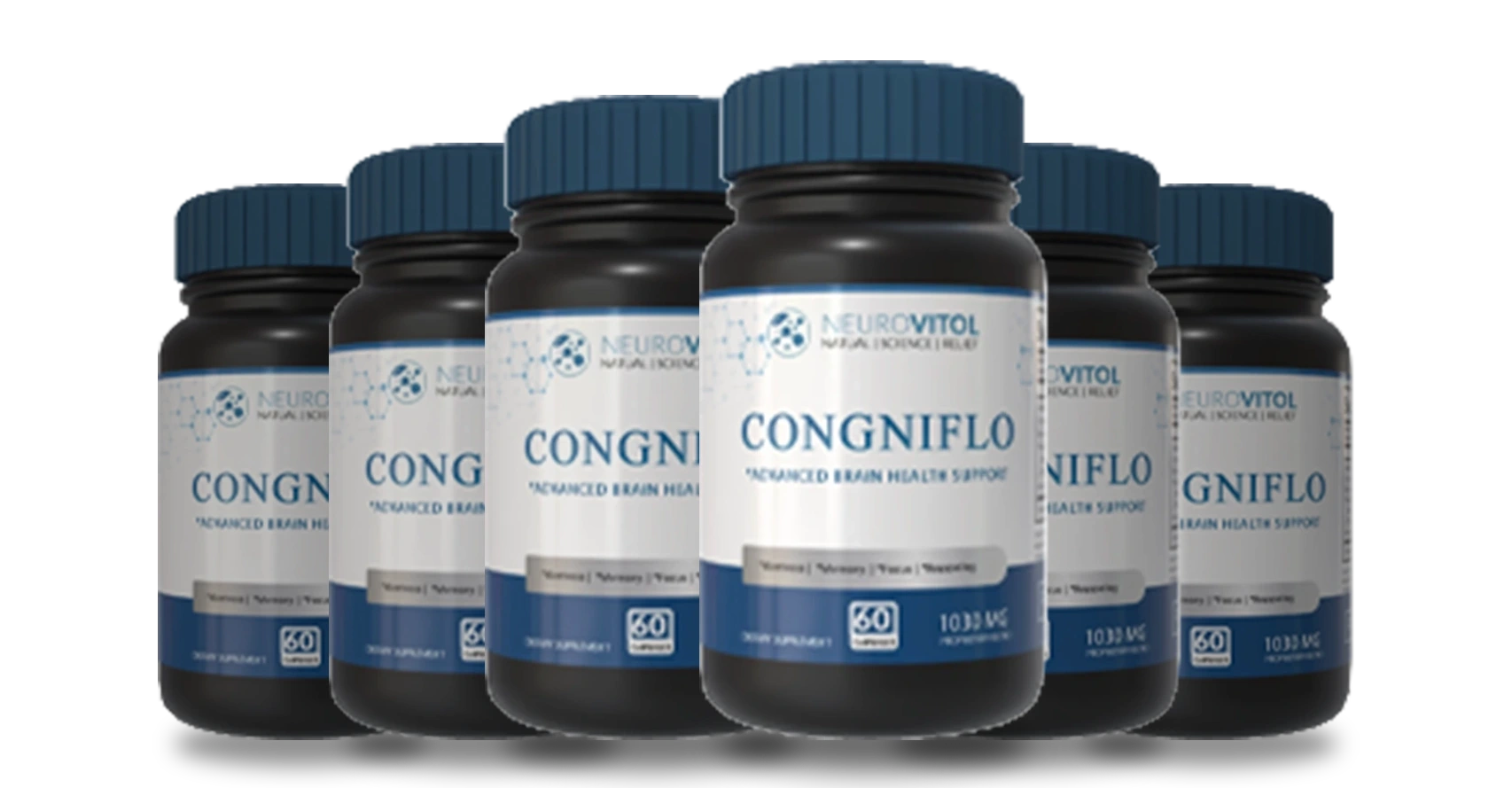
Congniflo brings together ten nootropic and botanical actives — including Bacopa, Lion’s Mane, Ginkgo and vitamin B12 — in one easy daily capsule to help cover the nutrient gaps behind everyday forgetfulness. Backed by a 60-day money-back guarantee.
See Congniflo Packages
No capsule out-works a distracted mind, so the attention habits above always come first. But once the foundations are in place, a targeted daily nootropic is a sensible way to help cover the recurring nutrient gaps — B12, botanicals traditionally used for memory and circulation, and adaptogens for mental stamina — that can quietly feed forgetfulness. That is the thinking behind Congniflo: rather than juggling a shelf of separate bottles, you get ten well-chosen actives in a single capsule you will actually remember to take. For the bigger picture, our guide on how to support memory, focus and mental clarity naturally ties the nutrients and habits together.
Because these effects build gradually, consistency beats intensity. Choose a routine you can keep, give it a fair trial of several weeks, and judge it by how reliably your recall feels over time — not by a single forgetful afternoon.
Most everyday forgetfulness is not a memory problem at all but an attention problem. When you are stressed, under-slept, doing three things at once or running on an empty stomach, your brain never fully registers the information in the first place, so there is nothing solid to recall later. Fixing the inputs — sleep, focus, blood sugar and stress — usually restores day-to-day memory.
A modest slowing of recall and word-finding is a normal part of healthy aging, and it does not mean anything is wrong. What is not simply age is a sudden change, forgetting how to do familiar tasks, or lapses that worry the people around you. Those deserve a conversation with a qualified clinician rather than a lifestyle tweak.
Protect a consistent sleep window, do one thing at a time instead of multitasking, eat balanced meals that steady blood sugar, move your body most days, and use simple external systems such as a calendar, a notes app and a fixed home for your keys. A food-first diet plus a daily nootropic can help cover common nutrient gaps.
Yes. When stress hormones stay elevated, the brain regions you rely on for forming and retrieving memories are among the first to struggle. Forgetfulness that flares during busy, high-pressure stretches and settles when life calms down is very often stress-driven rather than a sign of decline.
See a healthcare professional if memory changes are sudden, steadily worsening, interfere with work or daily life, or are noticed by family and friends, and especially if they come with confusion, personality changes or difficulty with familiar tasks. This article covers ordinary, lifestyle-related forgetfulness only and is not a substitute for medical advice.
The Congniflo Research Team is an independent group of nutrition and brain-health writers who translate peer-reviewed research and public-health guidance into plain, practical advice. We read the source material, cite it, and keep our articles free of hype and disease claims. Our aim is simple: help you make calm, informed choices about supporting your mind every day. This article is educational and is not a substitute for personalised medical advice.
† These statements have not been evaluated by the FDA. This product is not intended to diagnose, treat, cure or prevent any disease. This article is for general information only and is not medical advice.