
Home › Blog › How Gut Health Affects Memory and Focus
Symptoms & Lifestyle| The link | How gut health affects memory and focus: the gut and brain talk constantly through the gut–brain axis, so what happens in your gut is felt in your head. |
| Why it matters | A diverse microbiome, low inflammation and steady fuel all support clear thinking; an upset gut often shows up as fog and poor focus. |
| The fixes | Eat fibre-rich plants and fermented foods, cut ultra-processed food and sugar, hydrate, sleep, move — plus daily nootropic support. |
Have you ever had a “gut feeling,” felt butterflies before a big moment, or noticed that a week of heavy, processed meals leaves your head as sluggish as your stomach? These everyday experiences hint at a profound truth that science is only beginning to map: your gut and your brain are in constant conversation. Understanding how gut health affects memory and focus opens up one of the most exciting — and most practical — frontiers in looking after your mind.
This guide explains the gut–brain connection in plain language: what it is, how the trillions of microbes in your digestive tract can influence how clearly you think, and the simple, food-first habits that support both a happy gut and a sharp mind. As always, we will keep the claims measured — this is a young field — while giving you genuinely useful things to do today.
Scientists call the communication network between your digestive system and your brain the gut–brain axis. It is a genuine, physical, two-way street, and it uses several lines of communication at once:
At the centre of all this is the microbiome: the community of trillions of bacteria and other microbes living in your gut. When that community is diverse and well-fed, it helps produce beneficial compounds, keeps the gut lining healthy and inflammation low, and supports steady energy — all conditions the brain needs for clear concentration and reliable memory. When it is disrupted — by a poor diet, illness or chronic stress — many people notice the mental side effects: fog, flatness and trouble focusing.
One of the clearest routes from gut to brain is inflammation. A diet heavy in ultra-processed foods and low in fibre can disturb the microbiome and irritate the gut lining, nudging the whole body toward a state of low-grade inflammation. The brain is sensitive to those inflammatory signals, and many people experience them as mental fog, low mood and blunted focus. Calming that inflammation through diet is one reason a gut-friendly way of eating so often clears the head.
What and how you eat also governs the fuel your brain receives. Meals built on refined carbohydrates and sugar spike and then crash blood sugar, and those swings land squarely on your concentration — the same mechanism behind the mid-afternoon slump we cover in why you lose focus in the afternoon. A fibre-rich, whole-food diet that keeps blood sugar steady is kinder to both gut and brain.
Finally, your gut is where you actually absorb the nutrients your brain depends on — B vitamins, omega-3 fats, minerals and more. A struggling digestive system can mean that even a decent diet delivers less to the brain than it should. Gut health, in other words, is the gateway through which brain nutrition passes.
Plenty of people report that digestive trouble, a stretch of ultra-processed eating or a disrupted microbiome coincides with brain fog, low energy and scattered attention — and the mechanisms above make that link plausible. That said, brain fog is a many-headed thing with overlapping causes, and the gut is only one of them. Stress, poor sleep, dehydration and nutrient gaps all pull in the same direction, which is why our overview of what causes brain fog and how to clear it naturally is a helpful companion here. The encouraging news is that the habits which soothe the gut tend to help the other causes too.
The single most powerful lever is your daily diet. You are not just feeding yourself — you are feeding your microbiome, and it repays a good diet quickly.
Beneficial gut bacteria thrive on fibre, and most of us do not eat enough. Fill your plate with a wide variety of plants — vegetables, fruit, whole grains, beans, lentils, nuts and seeds. Variety matters as much as quantity: a diverse diet builds a diverse, resilient microbiome.
Fermented foods deliver live beneficial cultures. Yoghurt with live cultures, kefir, sauerkraut, kimchi, miso and other traditionally fermented foods are simple, time-tested additions that help diversify the gut community.
Oily fish such as salmon, sardines and mackerel supply omega-3 fats that support both the gut lining and the brain — a cornerstone of the best foods for brain health and memory. Building meals around whole, minimally processed foods naturally crowds out the ultra-processed products that disturb the microbiome.
These are the foods most associated with a less diverse microbiome, more inflammation and blood-sugar swings. You do not need perfection — simply shifting the balance toward whole foods makes a real difference to how your gut, and your head, feel.

Because the axis runs both ways, looking after your mind also looks after your gut. Three habits matter especially.
Chronic stress changes the gut environment and the microbiome, and an unsettled gut sends stress signals back to the brain — a loop that can cloud thinking. Calming that loop is powerful, as we explain in how stress affects memory and mental clarity.
Sleep and the microbiome influence one another, and both are essential for clear memory. A consistent, adequate night’s sleep supports the whole system — see how sleep affects memory and concentration.
Regular physical activity is linked with a healthier, more diverse microbiome as well as sharper thinking, and adequate water keeps digestion — and concentration — running smoothly. It is one more reason movement is such a reliable brain habit.

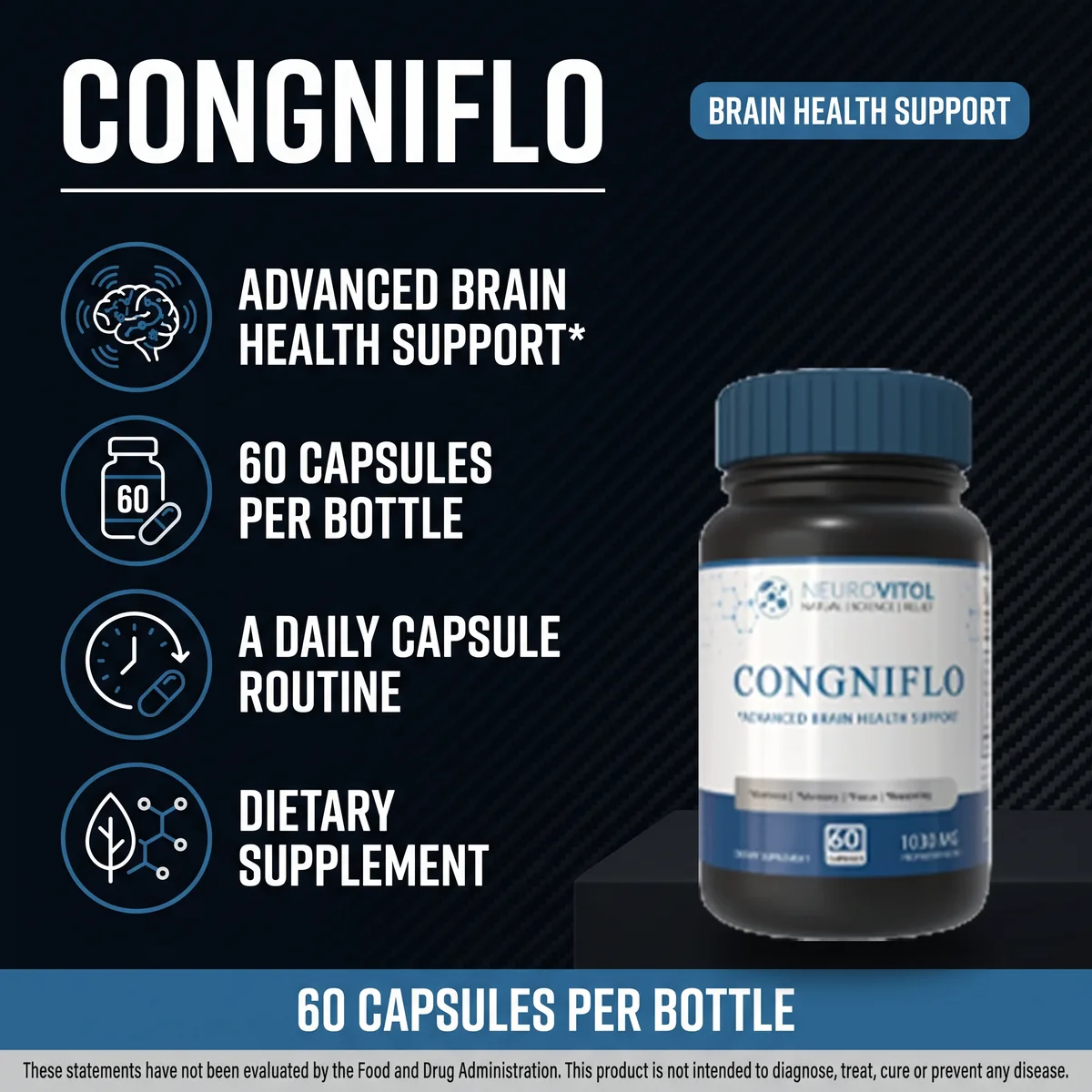
Congniflo combines ten nootropic and botanical actives — including L-theanine and adaptogens for calm, steady attention — in one easy daily capsule. Backed by a 60-day money-back guarantee.
See Congniflo PackagesLet us be clear-eyed: research into the gut–brain axis is young, and no supplement is a shortcut past a good diet, sound sleep and lower stress — those foundations do the heavy lifting. But a thoughtful daily nootropic can complement a gut-friendly lifestyle by supplying nutrients and botanicals traditionally used for focus and mental clarity. L-theanine is prized for calm, relaxed attention, while adaptogens are traditionally used to help the body handle everyday stress — which, as we have seen, is closely tied to gut health. Rather than sourcing each separately, Congniflo brings ten actives into a single morning capsule. For the wider strategy, see our guide to how to support memory, focus and mental clarity naturally, or visit the Congniflo homepage.
The most hopeful part of the gut–brain story is how much of it is in your hands. Every gut-friendly meal is also a brain-friendly one — and the payoff, in clearer focus and steadier memory, tends to arrive faster than you might expect.
The gut and brain are in constant two-way communication through what scientists call the gut–brain axis — the vagus nerve, the immune system, hormones and chemical messengers. A diverse, well-fed gut microbiome helps produce compounds involved in mood and thinking, keeps inflammation in check and supports steady energy, all of which underpin clear concentration and reliable memory. When the gut is inflamed or the microbiome is disrupted, many people notice fog, low mood and poorer focus.
The gut–brain connection, or gut–brain axis, is the network of communication between your digestive system and your brain. They talk through the vagus nerve, immune signalling, hormones and chemicals made by gut bacteria. Because so many signalling molecules involved in mood and alertness are influenced in the gut, the state of your digestive system can be felt in how clear-headed and focused you feel.
Many people report that digestive upset, an ultra-processed diet or a disrupted microbiome coincides with brain fog, low energy and trouble concentrating. Likely routes include low-grade inflammation, blood-sugar swings from refined foods, and nutrient shortfalls when digestion is not working well. Improving diet and gut health often goes hand in hand with clearer thinking, though fog has many causes and is not always about the gut.
Fibre-rich plants feed beneficial bacteria, so vegetables, fruit, whole grains, beans, nuts and seeds are the foundation. Fermented foods such as yoghurt, kefir, sauerkraut and kimchi add live cultures, and oily fish provides omega-3 fats that support both gut and brain. Cutting back on ultra-processed foods and added sugar, and staying hydrated, rounds out a gut- and brain-friendly way of eating.
Research into probiotics for mood and thinking is promising but still early, so no supplement should be treated as a guaranteed brain-booster. The most reliable way to support the gut–brain axis is a varied, fibre-rich, mostly whole-food diet, plus good sleep, regular movement and stress management. A daily supplement can complement, but not replace, those foundations.
The Congniflo Research Team is an independent group of nutrition and brain-health writers who translate peer-reviewed research and public-health guidance into plain, practical advice. We cite our sources, avoid hype, and never make disease claims. Our goal is to help you make calm, informed choices about supporting your mind every day. This article is educational and is not a substitute for personalised medical advice.
† These statements have not been evaluated by the FDA. This product is not intended to diagnose, treat, cure or prevent any disease. This article is for general information only and is not medical advice.